


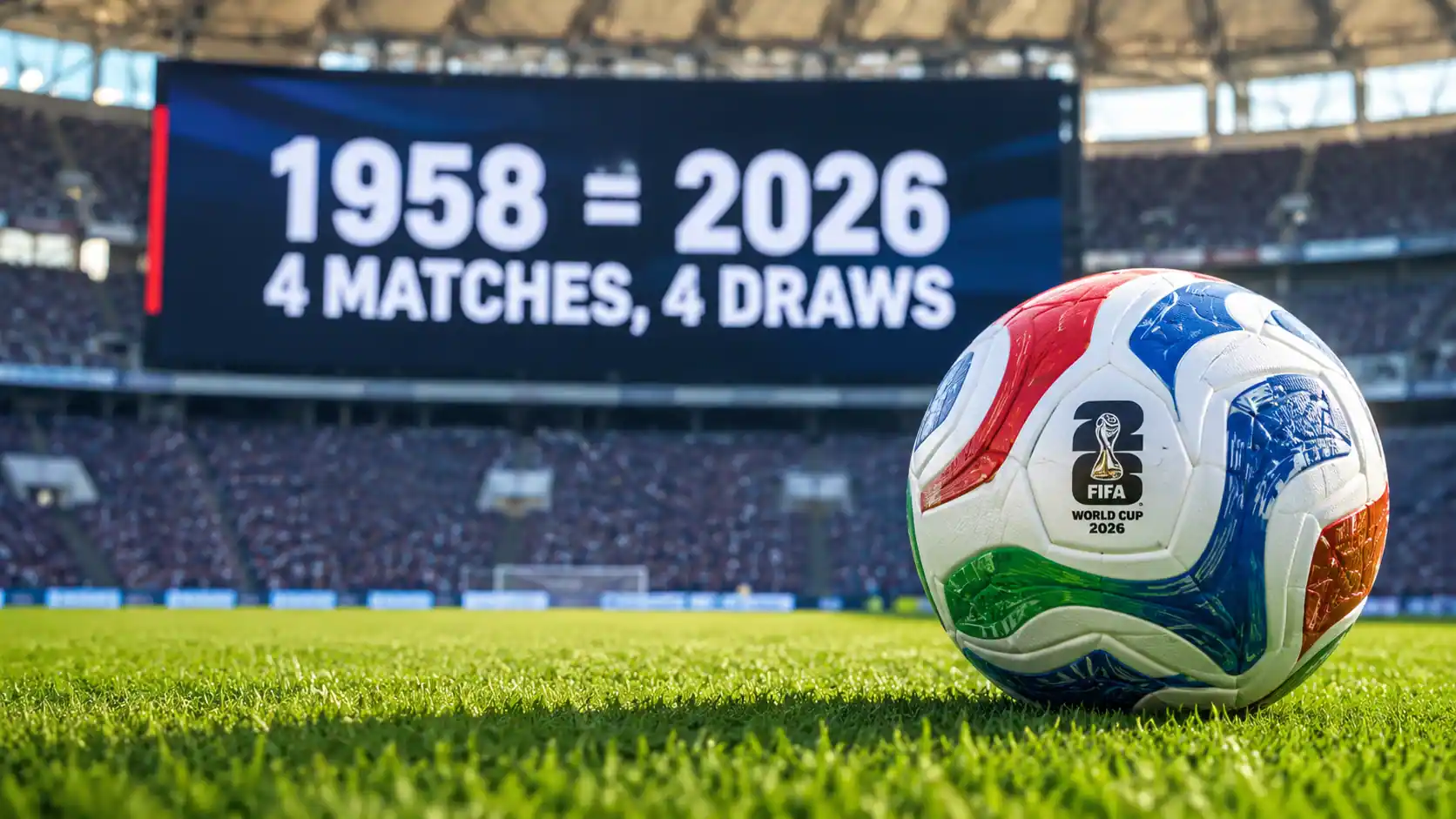
June 15, 2026, will be remembered as a remarkable day in football history. Every match played on that day ended in a draw, bringing an end to a 68-year-old trend and creating one of the most unusual chapters the FIFA World Cup 2026 has seen so far.
This unexpected run of results has not only reshaped the group-stage standings but has also highlighted how competitive the tournament has become. It sent a strong message that there are no easy opponents at this World Cup, with underdogs proving they can challenge even the strongest teams.
For the traditional football powerhouses, June 15 was a clear reminder that every game matters and that nothing can be taken for granted on football’s biggest stage.
Unearthing the 68-Year-Old Football History
To understand the magnitude of what happened, we have to look back to the World Cup 1958 record in Sweden. On June 15, 1958, the football world witnessed an identical day of relentless stalemates where all four scheduled group matches ended without a definitive winner.
The historical June 15, 1958 scorecard looked like this:
- Sweden vs Wales (0–0): A tactical deadlock where the hosts couldn’t pierce the Welsh defense.
- England vs Austria (2–2): A high-octane thriller where England fought back to split the points.
- Paraguay vs Yugoslavia (3–3): One of the highest-scoring draws in World Cup group stage history.
- West Germany vs Northern Ireland (2–2): The defending champions were pushed to their limits by a resilient Irish squad.
For nearly seven decades, through multiple generations of legendary attackers and tactical shifts, that single-day draw record stood untouched. Modern football thrives on high-pressing systems designed to force definitive results, yet the defensive resilience shown on June 15, 2026, managed to replicate this exact historical anomaly.
June 15, 2026 Match Highlights: How the Drama Unfolded
Fast forward to the action in the FIFA World Cup 2026: four highly competitive matches took place across the host nations, and history perfectly repeated itself as every single clash ended with the points shared:
Spain vs Cape Verde (0–0)
The biggest shockwave of the day came from this fixture. Former world champions Spain threw everything they had at Cape Verde, but they ran into a stubborn defensive block. Cape Verde pulled off a tactical masterclass, neutralizing Spain’s star-studded frontline and securing a historic 0–0 draw.
Belgium vs Egypt (1–1)
An intense clash between European powerhouse Belgium and African giants Egypt ended in a tight 1–1 thriller. Egypt’s disciplined counter-attacks heavily frustrated the Belgian lineup, forcing them to share the spoils after a grueling 90 minutes.
Saudi Arabia vs Uruguay (1–1)
Uruguay entered the match as heavy favorites, but Saudi Arabia showed tactical discipline that left the South American giants visibly frustrated. Both sides traded brilliant goals, but neither could find the decisive match-winner.
Iran vs New Zealand (2–2)
This was undoubtedly the most entertaining and high-scoring match of the day. Both Iran and New Zealand refused to back down, trading blows in a 2–2 draw that kept fans on the edge of their seats until the final whistle.
Why Are We Seeing So Many FIFA World Cup 2026 Matches Ending in a Draw?
Football analysts point directly toward the FIFA World Cup 2026 new format as the primary reason behind this defensive trend.
With the tournament expanding from 32 to 48 teams, the stakes in the group stage have shifted dramatically. Under the new layout, 12 groups are fighting for a spot in the historic Round of 32. Crucially, the four best third-placed teams across all groups will also advance to the knockouts.
The Underdog Strategy: Teams now know that a single point against a powerhouse is worth its weight in gold. Instead of playing an open game and risking a heavy defeat, smaller nations are deploying highly disciplined low-blocks. Their mantra is clear: “If we cannot win, we will make absolutely sure we do not lose.”
What This Means for Title Contenders Moving Forward
TThis historic day of draws sends a clear warning to tournament heavyweights. The defensive tactical evolution of smaller nations means that reputation alone will not win matches anymore.
As the FIFA World Cup 2026 moves forward, the pressure now shifts squarely onto teams like Lionel Messi’s Argentina and Kylian Mbappé France. Argentina have already sent a strong statement with a Messi hat-trick against Algeria in their opening match. If these elite squads want to avoid the group-stage traps that caught Spain and Belgium, they will need to find creative ways to unlock these stubborn defensive units. One thing is certain—the road to the ultimate golden trophy is going to be far more grueling than anyone anticipated.