


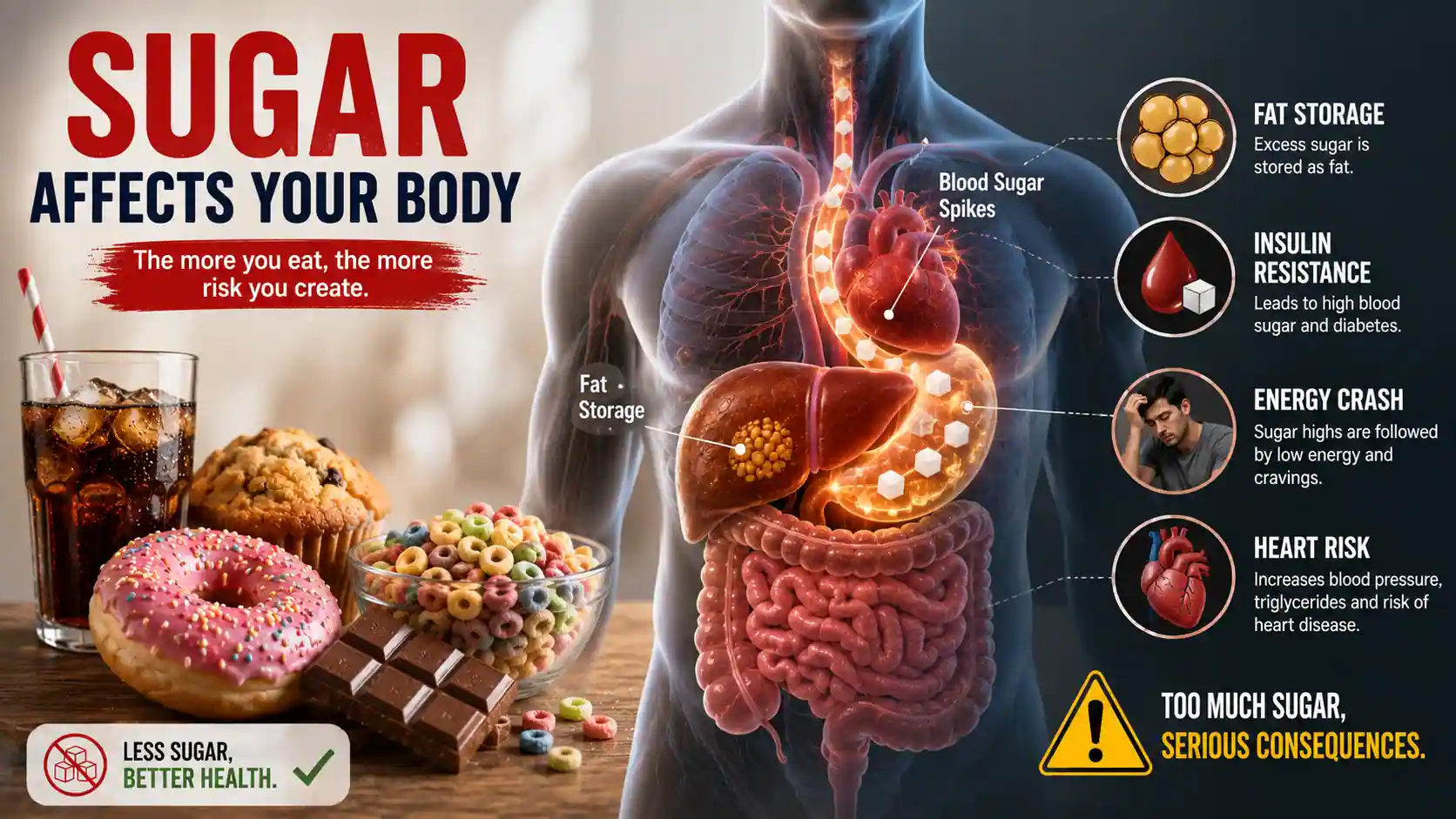
How sugar affects your body depends mainly on how much sugar you consume, the type of sugar, and how often you consume it. Small amounts are handled well by most healthy bodies. But diets consistently high in added sugar raise the risk of obesity, insulin resistance, fatty liver disease, and heart problems over time. Understanding what happens once sugar enters the body helps explain why sweetened drinks, processed snacks, and high-sugar diets affect energy, appetite, and long-term health in ways that aren’t always obvious.
What Sugar Actually Is — and Why We Eat So Much of It
Sugar is a simple carbohydrate made up mainly of sucrose, glucose, and fructose. It provides quick energy with very little nutritional value. While sugar occurs naturally in fruits and dairy, the modern diet adds far more through soft drinks, packaged foods, desserts, and baked goods. Eating a lot of added sugar can cause blood glucose to spike rapidly, forcing the pancreas to release more insulin — and over time, that repeated pressure can lead to fat accumulation, weight gain, and insulin resistance.
Added sugars are introduced during food processing or preparation. Free sugars also include sugars found in fruit juices, honey, and syrups. Chemically, these sugars are very similar to naturally occurring sugars. The main difference is the type of food they come from. Added sugar is easier to overconsume because processed foods and sugary drinks usually contain very little fiber or protein to slow digestion and help people feel full.
Global sugar consumption has increased steadily with urbanization, processed food production, and the growing popularity of sugary drinks and packaged foods. Sugar is also widely used to improve flavor, texture, and shelf life, which is why it appears in products that do not seem especially sweet, including bread, sauces, salad dressings, breakfast cereals, and processed meats. Over time, consistently high sugar intake has been linked to several health problems, including obesity, heart disease, fatty liver disease, tooth decay, and metabolic disorders.
How Sugar Affects Your Body After You Eat It
Digestion starts in the mouth and continues in the small intestine, where sugar is broken down into glucose and fructose. Glucose quickly enters the bloodstream for energy, while fructose is mainly processed by the liver. When consumed in excess, some fructose can be converted into fat more easily than glucose.
As blood glucose rises, the pancreas releases insulin, which shuttles glucose into cells for energy or stores it for later. How fast this rise happens depends heavily on what else is in the meal. Sugar consumed alongside fiber, fat, or protein enters the bloodstream more gradually. In liquid form — a sweetened drink — sugar empties from the stomach faster and produces a sharper glucose response, partly because liquids don’t fill you up the way solid food does.
Once blood glucose drops after a spike, some people feel a temporary dip in energy or concentration. This isn’t a universal physiological event; it varies by individual metabolism and meal composition. But it’s one reason high-sugar meals without accompanying nutrients can leave people feeling hungry again sooner than expected.
Any sugar the body doesn’t use for immediate energy gets stored as glycogen in the liver and muscles. When those stores are already full, the surplus can be converted into fat through a process called de novo lipogenesis. The liver plays a central role here, and chronic high intake — particularly of fructose — can cause fat to accumulate in liver cells over time.
Sugar also activates the brain’s reward pathways. Dopamine is released in response to sweet taste, reinforcing the desire to eat sweet foods again. That’s a normal learning mechanism, not a malfunction. The difficulty arises when the food environment makes highly palatable foods constantly available, making that learned preference hard to moderate.
Short-Term Effects of Eating Too Much Sugar
Energy fluctuations. A large dose of sugar without fiber or protein can cause blood glucose to rise and fall more sharply than usual. The “crash” that follows isn’t dangerous for most people, but it can show up as fatigue, reduced focus, or unexpected hunger soon after eating.
Increased appetite. Foods high in added sugar tend to be less filling relative to the calories they contain. Sugary drinks are the clearest example — they deliver substantial calories without triggering the same fullness signals as solid food, making it easy to consume more without noticing.
Cravings. Rapidly digested sugar can reinforce the desire for more sweet food, partly through glucose-related effects and partly through the reward response described above. This is why high-sugar snacking can feel cyclical rather than satisfying.
Mood and concentration. Blood sugar swings can affect focus and mood, especially when sugar is consumed as a substitute for a proper meal. The degree varies depending on overall diet pattern, sleep, and stress levels.
Hyperactivity in children. This one is widely believed but weakly supported by research. Controlled studies have not found a direct causal link between sugar intake and hyperactivity. Much of what parents observe appears to be driven by expectation rather than the sugar itself.
Long-Term Health Effects of High Sugar Intake
Weight Gain and Abdominal Fat
Excess added sugar, especially from sweetened beverages, contributes to weight gain primarily by making it easier to consume more calories than the body needs. Liquid calories don’t reduce subsequent food intake the way solid food does, so daily soda or sweetened tea can quietly create a sustained caloric surplus. A large umbrella review published in the BMJ found consistent patterns between higher sugar intake and increased body weight, with particularly strong evidence around sugary drinks and fat accumulation.
Insulin Resistance
Repeated high-glucose exposures, combined with excess caloric intake and growing visceral fat, can gradually reduce the body’s sensitivity to insulin. The pancreas then needs to produce more insulin to achieve the same effect. This is the early metabolic pathway toward prediabetes, and it develops slowly — often without obvious symptoms for years.
Type 2 Diabetes
Sugar doesn’t directly cause type 2 diabetes in a single step. The pathway runs through weight gain, insulin resistance, and chronic metabolic stress. A meta-analysis covering roughly 1.5 million people found that sugar-sweetened beverage consumption was associated with meaningfully higher risk of type 2 diabetes. In India, where the diabetes burden is already significant — WHO estimates 77 million adults with diabetes and nearly 25 million with prediabetes — daily sweetened drink consumption is a real public health concern.
Heart Disease
High sugar intake raises cardiovascular risk through several overlapping mechanisms: it contributes to weight gain, elevates triglyceride levels, worsens insulin resistance, promotes inflammation, and may affect blood pressure. The same large meta-analysis found sugary drink consumption associated with higher rates of coronary heart disease. The American Heart Association specifically recommends limiting added sugar because of its cardiometabolic effects.
Fatty Liver Disease
The liver processes both fructose and excess carbohydrate. When intake consistently exceeds what the body can burn, the liver converts surplus carbohydrate into fat. That fat can accumulate in liver cells, contributing to non-alcoholic fatty liver disease and raising the risk of further metabolic complications. The connection is most relevant when sugary drinks and desserts are consumed regularly alongside an overall high-calorie diet.
Blood Pressure
High added sugar intake is associated with elevated blood pressure in some research, with proposed mechanisms involving insulin effects, sodium retention, and changes in vascular function. The pattern tends to be more pronounced in people with existing excess weight or metabolic issues rather than being universal.
Skin Aging and Acne
Sugar contributes to skin aging through a process called glycation — sugar molecules bind to structural proteins like collagen and elastin, forming compounds called advanced glycation end products (AGEs). These reduce skin elasticity and accelerate visible changes in texture and appearance. UV exposure amplifies the effect.
The link between sugar and acne is less direct. High-glycemic diets can elevate insulin and IGF-1 signaling, which may worsen acne in people already prone to it. The effect isn’t universal, but it’s supported by research in certain populations.
Tooth Decay
This is one of the best-established consequences of frequent sugar exposure. Bacteria in the mouth metabolize sugar into acids that gradually demineralize tooth enamel. The risk is highest when sugar is consumed repeatedly throughout the day — through regular snacking or slow sipping of sweetened drinks — because the enamel has less recovery time between acid exposures.
Inflammation
Chronic high intake of added sugar promotes low-grade systemic inflammation, which feeds into cardiovascular, metabolic, and liver disease risk. The mechanisms likely involve oxidative stress, changes in fat tissue function, and shifts in gut-liver signaling.
Hormonal Effects
Sugar influences insulin, leptin (the fullness hormone), ghrelin (the hunger hormone), and reproductive hormones indirectly through its effects on weight and insulin sensitivity. Diets high in refined sugars are sometimes associated with PCOS-related symptoms and menstrual irregularity, though the pathway typically runs through metabolic dysfunction rather than sugar intake alone.
Digestive Health
A diet heavy in added sugar often crowds out fiber-rich foods, which can negatively affect gut microbiome composition and bowel regularity. Some people also experience bloating or discomfort from high-fructose foods or sugar alcohols found in processed products, though this varies considerably between individuals.
Mental Health and Cognition
Some observational research points toward higher added sugar intake being associated with poorer mental health outcomes. The mechanisms are indirect — poor diet quality can worsen sleep, energy regulation, and metabolic health, all of which affect mood. It’s more accurate to say high sugar intake may contribute to mental strain through these channels than to claim a direct link to anxiety or depression.
Long-term high sugar intake is also connected to poorer cardiometabolic health, which in turn can affect cognitive function. Inflammation, insulin resistance, and vascular changes are plausible pathways between chronic high-sugar diets and memory concerns.
Sugar, the Brain, and Cravings
The brain responds strongly to sweet food. Eating sugar triggers dopamine release, reinforcing the behavior and increasing the likelihood of seeking it again. Research from the Max Planck Institute has shown this response is stronger in people who report more intense cravings, suggesting individual variation in reward sensitivity.
Ultra-processed foods tend to combine sugar with fat, salt, and refined starch in ratios that maximize palatability and encourage habitual consumption beyond hunger. Emotional eating involving sweet foods is common because they provide quick sensory relief — even if that relief doesn’t last.
Framing this in neurological terms matters. Sugar cravings aren’t a sign of weak willpower. They reflect normal reward learning in an environment saturated with highly palatable foods. This is worth keeping in mind for anyone trying to cut back, because strategies that address the behavioral and environmental context tend to work better than restriction alone.
How Sugar Affects the Skin
Glycation begins when blood glucose is elevated. Sugar molecules attach to collagen and elastin fibers, gradually forming AGEs that accumulate in connective tissue. Over time, this reduces skin elasticity, dulls the complexion, and accelerates fine lines. The effect is cumulative and more pronounced in people with chronically elevated blood sugar.
The link to acne is hormonal rather than direct. High-glycemic diets raise insulin levels, which elevate IGF-1, a growth factor that can stimulate oil production and skin cell turnover. For people predisposed to acne, reducing high-glycemic foods — including refined sugars — may help, though responses vary.
Hidden Sources of Added Sugar
Most people associate high sugar intake with the obvious: soda, candy, pastries. But a significant portion of daily added sugar comes from foods that don’t taste particularly sweet. Common culprits include breakfast cereals, flavored yogurts, packaged fruit juices, granola bars, ketchup and other condiments, ready-made sauces, salad dressings, energy drinks, and even bread.
Food labels complicate this further. Sugar appears under many names — syrup, dextrose, maltose, cane juice, fruit concentrate, invert sugar, and more. When these names appear lower on an ingredient list or scattered across multiple entries, the total added sugar can be higher than it looks. Someone who rarely eats obvious sweets can still exceed daily recommendations if their diet relies heavily on processed food.
How Much Sugar Is Too Much?
The World Health Organization recommends keeping free sugars below 10% of total daily energy intake, with an additional benefit if that drops below 5%. For an adult eating roughly 2,000 calories a day, 5% works out to about 25 grams of free sugar.
The American Heart Association recommends no more than 6% of daily calories from added sugar — approximately 25 grams for most women and 36 grams for most men.
A single 330ml can of cola contains around 35 grams of sugar — already above both daily limits. That’s one drink, before anything else is factored in.
For children, most health guidelines emphasize keeping added sugar as low as possible. Some recommendations suggest no added sugar at all for children under two, and a 5% energy ceiling beyond that age.
Practical Ways to Reduce Sugar Intake
The most effective single change for most people is replacing sweetened beverages with water, plain tea, black coffee, or unsweetened milk alternatives. Sugary drinks are one of the largest sources of added sugar in modern diets, and they’re uniquely easy to overconsume because they’re not filling.
Reading nutrition labels helps identify less obvious sources. The figure to focus on is grams of added sugar per serving — keeping in mind how many servings are actually consumed at once. Products marketed as healthy (granola, fruit yogurt, protein bars, flavored oats) frequently contain more added sugar than expected.
Gradual reduction tends to work better than sudden elimination. Taste preferences for sweetness adapt over time, so reducing by small amounts — one fewer teaspoon of sugar in tea each week, for example — can make the eventual preference feel natural rather than like a sacrifice.
Managing the conditions that drive cravings also helps. Skipped meals, poor sleep, stress, and habitual screen-time snacking are common triggers for sweet cravings that have little to do with actual hunger. Meals that include adequate protein, fiber, and healthy fat reduce blood sugar variability and improve satiety, which makes it easier to skip the after-meal sweet.
A few substitutions that work well in practice: swap flavored yogurt for plain yogurt with fresh fruit; replace biscuits with nuts, roasted legumes, or fruit; choose whole fruit over juice; use spices like cinnamon or vanilla to add perceived sweetness without extra sugar.
Conclusion
Sugar doesn’t need to be avoided entirely, but consistently high intake of added sugar can affect the body in several ways that accumulate over time. Research consistently shows that excess sugar consumption — especially from sweetened drinks and ultra-processed foods — can increase the risk of obesity, insulin resistance, heart disease, fatty liver disease, and related long-term complications.
Practically speaking, reducing added sugar, paying closer attention to what’s in beverages, reading food labels, and eating more whole foods are among the most effective dietary shifts available. Small, consistent changes tend to outperform extreme restriction. Over time, taste preferences adjust, cravings become easier to manage, and metabolic health markers can meaningfully improve.
Sources & References
- World Health Organization (WHO)
- American Heart Association (AHA)
- Centers for Disease Control and Prevention (CDC)
Frequently Asked Questions
Is sugar bad for everyone?
Not necessarily. Small amounts of sugar are generally not harmful for most healthy people. The bigger concern is regularly consuming too much added sugar, especially from sugary drinks and heavily processed foods, which can increase the risk of weight gain, insulin resistance, and other long-term health problems.
Does fruit sugar count the same as table sugar?
The sugar found in fruit and table sugar is chemically similar, but the way the body processes them can be different. Whole fruits contain fiber, water, and nutrients that slow down sugar absorption and help people feel full for longer. Fruit juice behaves differently because it contains much less fiber and is easier to consume quickly, which is why it is treated more like free sugar in nutrition guidelines.
Can sugar cause diabetes?
Sugar does not directly cause diabetes, but regularly consuming too much added sugar can increase the risk of weight gain, insulin resistance, and type 2 diabetes over time — especially through sugary drinks and highly processed foods.
Is brown sugar healthier than white sugar?
No, brown sugar is not significantly healthier than white sugar. Both are chemically very similar, and the body processes them in nearly the same way. Brown sugar is simply white sugar mixed with molasses, which gives it color and a small amount of minerals, but not enough to provide meaningful health benefits.
Why are sugary drinks worse than other sweets?
Sugary drinks are considered worse because the body absorbs them very quickly, causing a faster rise in blood sugar levels. Unlike solid foods, they do not make people feel full for long, which makes it easier to consume too much sugar and excess calories without noticing.
Does sugar cause acne?
Sugar does not directly cause acne, but eating too many sugary foods may make acne worse in some people by increasing oil production and skin inflammation.
Can sugar affect sleep?
Yes, eating too much sugar may affect sleep by causing blood sugar changes that can make it harder to relax and maintain stable energy levels at night.
Are artificial sweeteners a better alternative?
Artificial sweeteners can help reduce sugar intake, but they are not automatically healthier. Their overall effect depends on a person’s diet, eating habits, and how often they are consumed.
How much sugar per day is considered safe?
WHO recommends keeping free sugars below 10% of daily energy, ideally below 5%. The AHA recommends no more than 6% of daily calories from added sugar — roughly 25 grams for most women and 36 grams for most men.
What is meant by free sugar?
Free sugar refers to sugar added to foods and drinks, as well as the sugar naturally found in honey, syrups, and fruit juice. It does not include the natural sugar found in whole fruits, vegetables, or milk.
Is honey healthier than sugar?
Honey contains small amounts of antioxidants and nutrients, but it is still a form of sugar. Like regular sugar, eating too much honey can raise blood sugar levels, so it should still be consumed in moderation.
What is the biggest source of added sugar in most people’s diets?
Sugar-sweetened beverages — sodas, packaged juices, flavored coffees, energy drinks, Soft drinks, Cold drinks — are among the most significant sources, because they’re consumed daily and quickly push intake above recommended limits.