


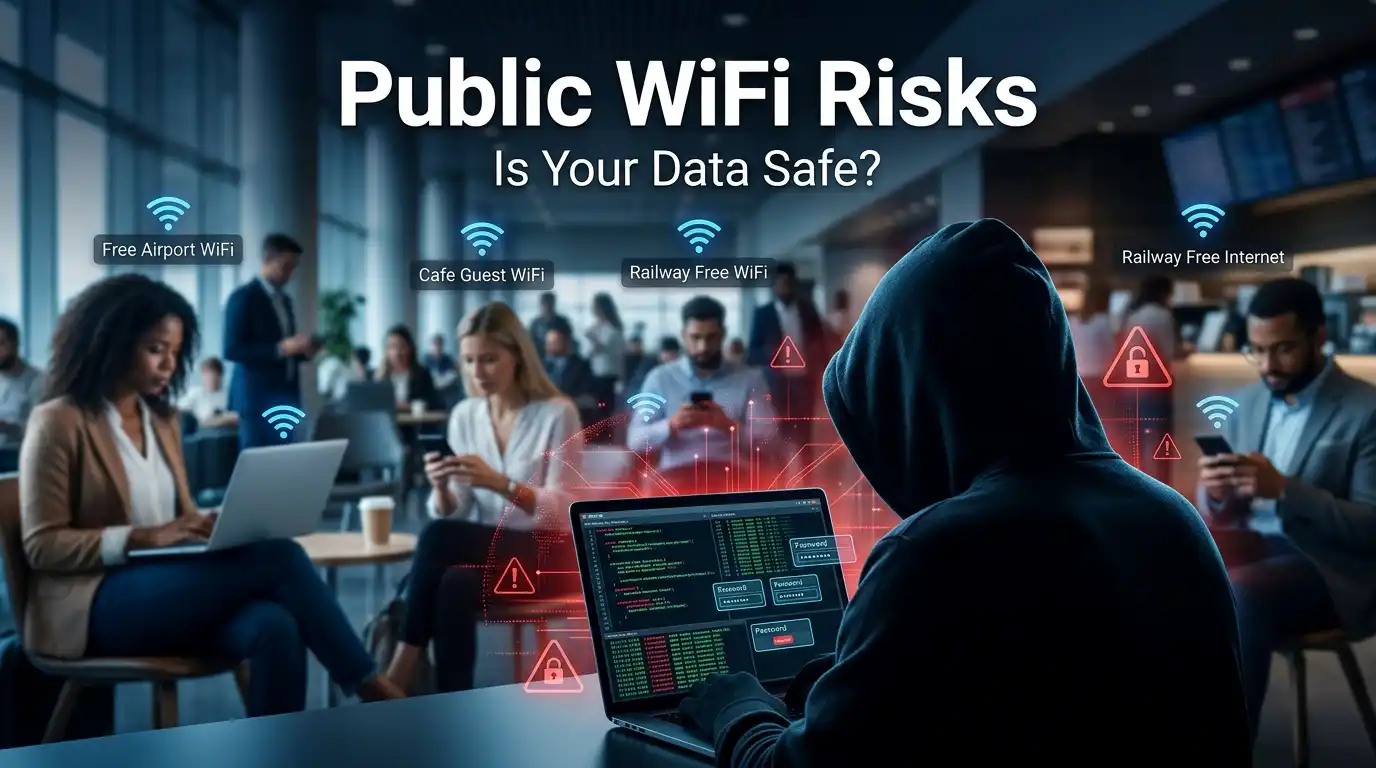
Public Wi-Fi risks are increasing rapidly as millions of people use free internet services at airports, railway stations, cafes, hotels, and shopping malls every day. Many users connect to public Wi-Fi networks for quick internet access and to save mobile data, but unsecured networks can expose personal information to hackers and cyber criminals. Cyber experts warn that weak public networks may allow attackers to steal passwords, banking details, payment information, browsing activity, and private data without users even noticing it. Fake Wi-Fi hotspots, malware attacks, and data tracking are also becoming common in crowded public places. This is why understanding public Wi-Fi safety has become very important for smartphone and laptop users who regularly connect to free internet services outside their homes or offices.
What is Public Wi-Fi?
Public Wi-Fi is a wireless internet service that is available in public places and can be used by many people at the same time. These networks are commonly found in places where visitors need quick and free internet access.
Today, millions of people use public Wi-Fi daily to browse websites, watch videos, check social media, send emails, or use online payment apps. In most cases, users can connect easily without installing anything.
Read More: Google Gemini AI Shopping: 5 Critical Changes You Can’t Ignore
People mostly use public Wi-Fi in places like:
- Cafes and restaurants
- Airports
- Railway stations
- Hotels
- Libraries
- Shopping malls
- Bus stands and public waiting areas
Some public Wi-Fi networks are completely open, while others require a common password that is shared with all visitors. Because many users connect to the same network together, these connections are often less secure compared to private home Wi-Fi.
This is where several public Wi-Fi risks begin. Many public networks do not use strong security systems, which makes it easier for hackers to target users. Cyber criminals can sometimes monitor internet activity, create fake Wi-Fi networks, or try to steal personal information from connected devices.
If users are not careful while using public Wi-Fi, important data such as passwords, banking details, emails, or personal files may become unsafe. This is why cyber experts always advise people to understand the major public Wi-Fi risks before connecting to any unknown networks.
Major Public Wi-Fi Risks Users Should Know
Password Theft
One of the biggest public Wi-Fi risks is password theft. Many public networks do not have strong security, which makes it easier for hackers to monitor internet activity. Cyber criminals can use special tools to secretly watch the data being shared between a user’s device and the WiFi network.
If a person logs into social media accounts, email accounts, banking apps, or shopping websites on an unsecured network, hackers may steal usernames and passwords. In some cases, fake login pages are also used to trick users into entering their details.
Once hackers get access to login information, they may:
- Hack personal accounts
- Access private photos or messages
- Steal important documents
- Misuse saved payment details
This is why experts advise users to avoid entering sensitive passwords while using free public WiFi networks.
Banking and Payment Risks
Experts also warn users to avoid online banking while using public Wi-Fi. Cyber criminals may try to capture sensitive financial information such as:
- Bank account details
- Debit or credit card numbers
- UPI information
- Payment passwords
These types of public Wi-Fi risks can lead to financial fraud and money loss.
Fake Wi-Fi Networks
Hackers often create fake Wi-Fi hotspots using names similar to real public networks, such as:
- Airport_Free_WiFi
- Cafe_Guest_WiFi
- Railway_Free_Internet
Many users connect without checking whether the network is genuine or not. Once connected, hackers may steal passwords, banking details, and other personal data. This is considered one of the most dangerous public Wi-Fi risks because fake networks are specially made to track user activity and capture sensitive information.
Malware and Virus Attacks
Public Wi-Fi networks can sometimes spread malware, spyware, and harmful viruses to connected devices. Cyber criminals may use unsecured networks to secretly install dangerous files on smartphones or laptops.
Once infected, malware can:
- Steal saved passwords
- Access personal files
- Track online activity
- Slow down the device
These public Wi-Fi risks are increasing rapidly as cyber attacks and online scams continue to grow worldwide.more common as cyber crimes continue to increase worldwide.
Data Tracking and Privacy Problems
Many free Wi-Fi providers also track user activity for advertising purposes. They may collect browsing history, location details, and app usage information.
While this may not always be illegal, privacy experts say users should still understand these public Wi-Fi risks before connecting to unknown networks.
Safety Tips to Reduce Public WiFi Risks
Use a VPN
A VPN helps encrypt internet traffic and makes online activity safer. Cyber security experts strongly recommend using a VPN on public networks.
Avoid Banking Apps
Users should avoid online banking, online payments, and sensitive transactions while connected to public WiFi.
Open Only HTTPS Websites
Before entering passwords or personal details, users should check whether the website uses HTTPS security.
Turn Off Auto Connect
Many smartphones automatically connect to saved networks. Turning off auto connect can help users avoid fake Wi-Fi traps.
Disable File Sharing
Laptop users should disable file sharing while using public networks. This reduces the chances of unauthorized access.
Conclusion
Public Wi-Fi is very useful for internet access in places like airports, railway stations, cafes, and hotels. However, many users still don’t understand the serious public Wi-Fi risks linked with unsecured networks. Hackers can use fake hotspots, malware attacks, and data tracking methods to target users who connect carelessly.
Cyber experts say people should avoid sharing sensitive information while using public Wi-Fi networks. Simple safety steps like using a VPN, avoiding online banking, checking the network name carefully, and opening only secure websites can greatly reduce these risks.
As online scams and cyber crimes continue to increase worldwide, understanding public Wi-Fi risks is now more important than ever. Staying alert and following basic security practices can help users protect their personal data and stay safer online.
Is public Wi-Fi safe for online banking?
No, experts recommend avoiding online banking and financial transactions on public Wi-Fi because hackers may steal sensitive information like passwords, card details, and banking data.
Can hackers steal data through public Wi-Fi?
Yes, cyber criminals can sometimes access unsecured networks to steal personal data, track online activity, and capture login details from connected devices.
How can users stay safe on public Wi-Fi?
Users should use a VPN, avoid opening sensitive websites, turn off auto-connect, and connect only to trusted networks with proper security.
What are fake Wi-Fi networks?
Fake Wi-Fi networks are fraudulent hotspots created by hackers with names similar to real public networks like airport, cafe, or railway Wi-Fi. When users connect to these networks, hackers may secretly monitor activity and steal sensitive information such as passwords, banking details, and personal data. Therefore, understanding public Wi-Fi risks is now more important than ever.