


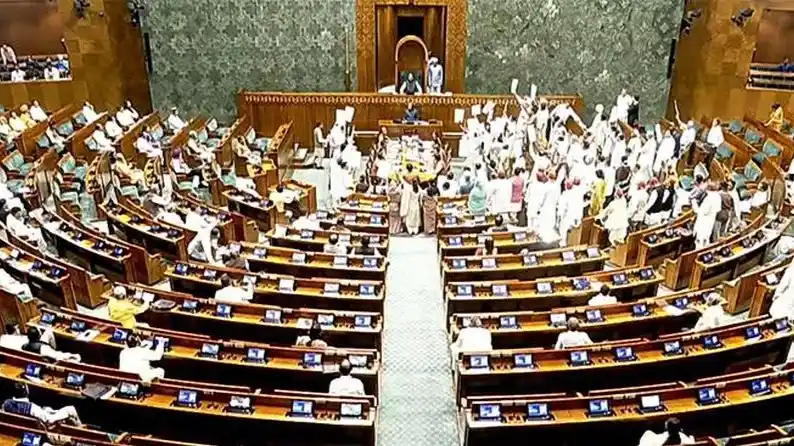
The Lok Sabha on Thursday, August 6, 2026, passed a bill that gives the central government legal room to permit banks and payment service providers to levy charges on payments made through the Unified Payments Interface. The move has put UPI charges on transactions at the centre of a fresh conversation about how India’s digital payments network gets funded going forward.
The bill in question, the Taxation and Other Laws (Amendment) Bill, 2026, amends the Payment and Settlement Systems Act, 2007, along with the Income Tax Act, 2025, and the Finance Act, 2026. It cleared the House through a voice vote, without any real discussion, as Opposition members continued protests over unrelated issues.
Before anyone assumes their UPI app will start charging them tomorrow, it helps to understand exactly what this Lok Sabha UPI bill does and does not do. It opens a legal pathway for charges. It does not, on its own, put a single rupee of fee on any UPI payment.
Why the Lok Sabha Passed the Bill
The Taxation and Other Laws (Amendment) Bill, 2026, was introduced in the Lok Sabha on Tuesday, August 4, 2026, as part of a wider package of tax and financial reforms. Two days later, the House resumed sitting at 2 p.m. after an earlier adjournment, and Finance Minister Nirmala Sitharaman moved the bill for consideration soon after members reassembled.
Persistent sloganeering from Opposition benches over separate matters meant the bill went through without any real debate. When a member was called on to move a resolution against the related ordinance, he chose not to speak, and the House proceeded straight to a voice vote. The bill passed comfortably, becoming the seventh bill cleared by the Lok Sabha in the ongoing Monsoon Session, and the fifth to be passed without discussion.
What the Amendment Changes for UPI Charges on Transactions
The core change sits in Section 10A of the Payment and Settlement Systems Act, 2007. Until now, this section barred banks and payment system providers from charging any fee, direct or indirect, on the electronic payment modes listed under Section 269SU of the Income Tax Act, a list that includes RuPay debit cards and BHIM UPI QR codes.
The amendment replaces that fixed reference with a more flexible clause. Instead of automatically tying Section 10A to whatever modes appear under Section 269SU, the law now lets the central government specify, through an official notification, one or more electronic payment modes on which charges may apply. In effect, the bill removes the blanket legal restriction that has kept Merchant Discount Rate (MDR) off the table for UPI and other notified digital payment modes.
This is a change to the legal framework behind UPI transaction charges, not an announcement of new fees. What gets charged, and when, depends entirely on future government notifications.
Does the Bill Mean UPI Users Will Pay Charges Immediately?
No. UPI transactions remain free for users and merchants right now, and nothing in this bill changes that on its own. The amendment only creates the legal ability for the government to notify specific payment modes for charging purposes at a future date.
Until such a notification is issued, current practice continues unchanged. No UPI fees have been announced, and the government has given no date, no percentage, and no indication of which categories of users or transactions might eventually be affected. Any discussion around UPI Charges on Transactions at this stage is about the legal framework, not an implementation timeline.
What Is Merchant Discount Rate (MDR)?
Merchant Discount Rate, usually shortened to MDR, is the fee a merchant’s bank or payment service provider charges for processing a digital payment. It is typically a small percentage of the transaction value, deducted before the merchant receives the money, and it covers the cost of running the payment infrastructure behind the scenes. MDR sits at the centre of most digital payment charges debates around the world.
Most card payments carry some form of MDR. In India, UPI has been the exception: since January 2020, the government has kept MDR at zero for UPI person-to-merchant transactions, meaning there have been no UPI Charges on Transactions, to encourage adoption across businesses of every size.
How the Current UPI Charging Rules Work
Under the existing framework, Section 269SU of the Income Tax Act requires businesses with an annual turnover above ₹50 crore to offer customers at least one low-cost digital payment option, including RuPay debit cards and BHIM UPI QR codes. Section 10A of the Payment and Settlement Systems Act then backed this up, ruling out UPI charges on transactions by banning any charge on those specified modes.
That protection has applied specifically to UPI and the other modes named under Section 269SU. It has never covered every electronic payment mode. RTGS (Real Time Gross Settlement) and NEFT (National Electronic Funds Transfer), the two systems banks use for direct account-to-account transfers, already involve a service charge for the sender in most cases. RTGS handles large-value transfers processed individually and immediately, while NEFT moves smaller amounts in batches through the day, and both have long charged a fee, unlike UPI.
What Finance Minister Nirmala Sitharaman Said
Nirmala Sitharaman moved the Taxation and Other Laws (Amendment) Bill, 2026, in the Lok Sabha for consideration and passage. Beyond formally introducing the legislation, the government’s stated approach is to keep any eventual charge on digital payment services small for ordinary consumers and small businesses, while giving banks, Payment Service Providers (PSPs), and other firms that build and maintain digital payment infrastructure a more sustainable revenue model.
That reflects the balancing act behind the bill: affordable payments for users, and sustainable funding for the institutions that keep UPI running.
RBI Governor Sanjay Malhotra’s View on UPI Charges
A day before the bill passed, on Wednesday, August 5, 2026, RBI Governor Sanjay Malhotra addressed the question of UPI charges on transactions directly, describing any detailed conversation about MDR as “premature” at this stage. He pointed out that investment in public payment infrastructure carries real costs, and that someone, eventually, has to bear them.
His comments committed neither the RBI nor the government to a specific plan, but they showed that the funding question behind UPI’s rapid growth is no longer being set aside.
Impact on Consumers, Merchants and Banks
For everyday users, nothing changes immediately. UPI Payment Charges remain at zero, and the bill by itself imposes no fee on anyone. Consumers should watch for future government notifications rather than any change in their banking app today.
Merchants, particularly small retailers and street vendors who adopted UPI because it carried no cost, have the most to watch here. Any future UPI Transaction Charges would be felt most by high-volume, low-margin businesses such as neighbourhood kirana stores, where even a small percentage fee adds up quickly.
Banks and Payment Service Providers stand on the other side of this question. They have pushed for years for some form of MDR on UPI, arguing that a free service at massive scale is hard to sustain without another revenue source to fund the infrastructure behind it.
Other Important Taxation Changes Included in the Bill
The UPI-related amendment is only one part of a broader package. The Bill also replaces a June 5, 2026 ordinance that gave Foreign Portfolio Investors (FPIs) a tax exemption on interest and capital gains from government securities, and eases relocation rules for fund managers moving to India.
Separate from the changes affecting UPI charges on transactions, the bill extends an existing income tax exemption for foreign companies that use contract manufacturers in India to produce specified electronic goods, including mobile phones, laptops, personal computers, tablets, servers, and their key parts and accessories. That exemption now runs until the 2040-41 financial year, giving companies a longer runway of policy certainty.
A related provision offers a 15-year income tax exemption, also until 2040-41, to foreign companies that store components in Indian customs warehouses before supplying them to domestic contract manufacturers. This is meant to strengthen the local supply chain that feeds electronics assembly lines.
The bill also removes certain approval and notification requirements for foreign cloud companies operating through Indian data centres, and allows these data centres to run on a leased basis rather than requiring direct ownership. Taken together, these measures aim to make India a more attractive base for manufacturing, technology infrastructure, and long-term investment.
What Happens Next
With the Lok Sabha’s approval secured, the bill still needs to clear the Rajya Sabha and receive presidential assent before it becomes law. Only then will Section 10A of the Payment and Settlement Systems Act formally carry the new notification powers over electronic payment charges.
Even then, the practical question of UPI charges on transactions stays open. The government has not indicated which payment modes it intends to notify first, what any charge might look like, or when such a notification might arrive. RBI Governor Sanjay Malhotra’s comments suggest the funding conversation is ongoing rather than settled, and Nirmala Sitharaman’s government has signalled a preference for keeping any future charge modest for consumers and small businesses.
For now, UPI stays free to use, exactly as it has been since its rollout. Anyone tracking the latest news on UPI charges would do well to watch for an official notification rather than speculation, since that notification, whenever it comes, is what will actually decide if and how UPI charges on transactions take effect.